Vocabulary.com Blog
Articles about Word Origins
Blog Excerpts
Macaroons, Macarons, and Macaroni
Ever wonder how the food terms macaroon, macaron and macaroni are related? It turns out that all three are "rooted in the great meetings of the Islamic and Christian culinary traditions in the Middle Ages." Read all about it on The Language of Food, Dan Jurafsky's wonderfully nuanced blog, here.
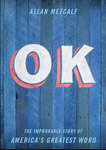 Today, March 23, 2011, is the first annual OK Day, celebrating America's greatest word (or expression?) and most successful export.
It's not the first birthday of OK, of course. OK was born 172 years ago, in the Boston Morning Post of March 23, 1839. But it's the first celebration.
Continue reading...
Today, March 23, 2011, is the first annual OK Day, celebrating America's greatest word (or expression?) and most successful export.
It's not the first birthday of OK, of course. OK was born 172 years ago, in the Boston Morning Post of March 23, 1839. But it's the first celebration.
Continue reading...
Blog Excerpts
The Story of "She"
In 2000, the American Dialect Society picked the Word of the Millennium: she, which entered English in the 12th century. But where did the word come from, exactly? Visual Thesaurus contributor Stan Carey writes on his Sentence First blog that its origins remain shrouded in mystery. Read all about it here.
 This is a strange expression, often heard in the form: “You’ll be laughing on the other side of your face [when X happens].” But what does it mean and where does it come from?
Continue reading...
This is a strange expression, often heard in the form: “You’ll be laughing on the other side of your face [when X happens].” But what does it mean and where does it come from?
Continue reading...
Blog Excerpts
Returning to "Eggnog"
It's time once again to break out the holiday eggnog! Ever wonder where the word eggnog comes from? Wonder no more: check out the Word Routes column that Visual Thesaurus editor Ben Zimmer wrote last holiday season, "The Origins of 'Eggnog,' Holiday Grog."
Blog Excerpts
OK? OK!
A new book by Allan Metcalf, Professor of English at MacMurray College and Executive Secretary of the American Dialect Society, is all about the history of a single word: OK. You can read a Q&A with Metcalf about OK: The Improbable Story of America’s Greatest Word on the Oxford University Press blog here.
 We welcome back Merrill Perlman, who writes the "Language Corner" column for Columbia Journalism Review. Here she considers how "scapegoat" gets turned into "escape goat" — an error that actually has an etymological basis.
Continue reading...
We welcome back Merrill Perlman, who writes the "Language Corner" column for Columbia Journalism Review. Here she considers how "scapegoat" gets turned into "escape goat" — an error that actually has an etymological basis.
Continue reading...
Sign up now (it’s free!)
Whether you’re a teacher or a learner,
Vocabulary.com can put you or your class
on the path to systematic vocabulary improvement.